


Ground beef is a staple in many kitchens, known for its versatility and rich flavor. Whether it’s sizzling in a skillet for tacos or forming the perfect burger patty, this popular protein source plays a significant role in countless dishes. However, understanding its nutritional content, especially calorie count, is crucial for those looking to maintain a balanced diet.
With various fat percentages available, the calorie content in ground beef can vary significantly. Leaner cuts offer fewer calories while still delivering essential nutrients. Knowing how many calories are in ground beef helps individuals make informed choices about their meals, whether they’re counting calories or simply aiming for a healthier lifestyle. Let’s dive into the details and uncover the calorie counts for different types of ground beef.
Understanding Ground Beef
Ground beef serves as a prominent protein source with varying nutritional profiles based on its type. Distinguishing between different types and understanding their nutritional composition helps make informed dietary choices.
Types of Ground Beef
Ground beef varies in fat content, which affects calorie counts. Common types include:
- Regular Ground Beef: Contains 25% fat, averaging 290 calories per 3-ounce portion.
- Ground Chuck: Contains 20% fat, averaging 250 calories per 3-ounce portion.
- Ground Round: Contains 10-15% fat, averaging 230 calories per 3-ounce portion.
- Extra Lean Ground Beef: Contains 5-10% fat, averaging 200 calories per 3-ounce portion.
These types provide flexibility for recipes and dietary preferences.
Nutritional Composition
Nutritional composition in ground beef includes proteins, fats, vitamins, and minerals. Here’s a breakdown per 3-ounce serving:
| Nutrient | Regular | Ground Chuck | Ground Round | Extra Lean |
|---|---|---|---|---|
| Calories | 290 | 250 | 230 | 200 |
| Protein (g) | 20 | 23 | 26 | 28 |
| Total Fat (g) | 22 | 18 | 15 | 10 |
| Saturated Fat (g) | 8 | 7 | 6 | 4 |
| Iron (mg) | 2.5 | 2.8 | 3 | 2.5 |
| Zinc (mg) | 6 | 5 | 4.5 | 4 |
Ground beef remains a valuable protein source, contributing essential nutrients for health.
Caloric Content of Ground Beef
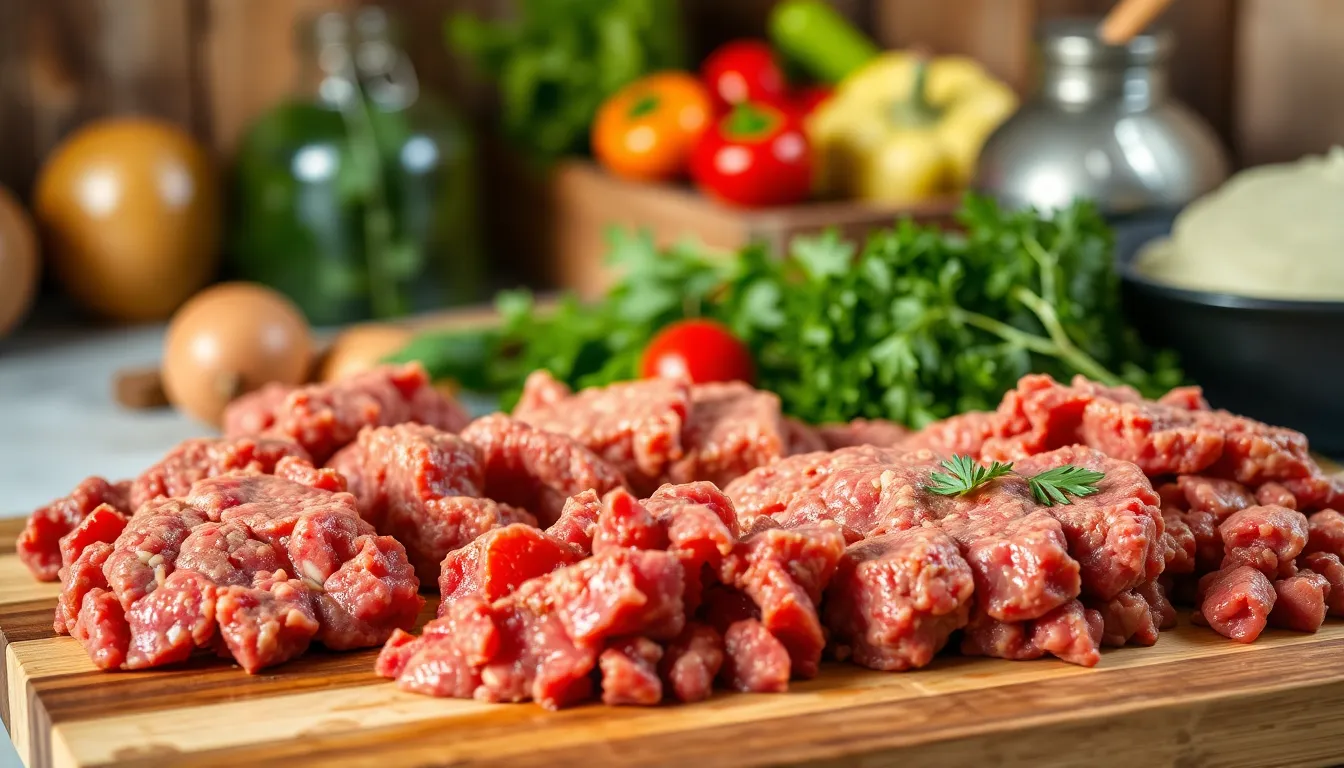
Ground beef’s caloric content varies significantly based on the fat percentage and cooking method. Understanding these differences helps in making informed dietary choices.
Lean vs. Fatty Ground Beef
The caloric content of ground beef directly correlates with its fat content. Regular ground beef, often containing about 25% fat, provides approximately 290 calories per 3-ounce serving. Ground Chuck, with a fat percentage around 20%, contains about 250 calories. Ground Round, which features 10-15% fat, averages 230 calories. Extra Lean Ground Beef, having a fat content of only 5-10%, offers approximately 200 calories. This distinction helps select ground beef suitable for specific dietary goals, such as reducing caloric intake while maintaining protein levels.
Cooking Methods and Their Impact
Cooking methods influence the final caloric content of ground beef. Grilling allows fat drippings to escape, potentially lowering calorie counts per serving. Frying or sautéing may result in higher calorie counts due to added oils or retained fats. For instance, pan-frying with oil increases total calories, making vegetable oil or butter choices significant in cooked dishes. In contrast, baking or broiling often retains more moisture and flavor without additional fats, maintaining caloric values closer to raw estimates. Therefore, cooking methods should align with caloric and nutritional goals.
Health Implications
Ground beef offers various health benefits alongside some potential drawbacks, making it crucial to understand its overall impact on one’s diet.
Benefits of Ground Beef
- Provides essential protein: Ground beef contains high-quality protein, with approximately 22 grams per 3-ounce serving, supporting muscle development and maintenance.
- Supplies vital nutrients: Ground beef is an excellent source of iron, which aids in oxygen transport throughout the body, and zinc, which plays an important role in immune function and wound healing.
- Contains healthy fats: Depending on the fat content, ground beef can supply essential fatty acids that contribute to energy levels and overall health.
- Offers culinary versatility: Because ground beef adapts well to numerous recipes, it promotes increased food variety in the diet, potentially encouraging better overall nutrition.
Potential Drawbacks
- High in saturated fat: Ground beef, especially varieties with higher fat content, contains saturated fat, which may elevate cholesterol levels and increase the risk of heart disease if consumed excessively.
- Caloric density: Depending on the fat percentage, ground beef can be high in calories, which may lead to weight gain if not balanced with physical activity.
- Potential for foodborne illness: Improper handling and cooking of ground beef can lead to foodborne pathogens, including E. coli and Salmonella, necessitating thorough cooking and safe food practices.
- Environmental concerns: The production of ground beef can have significant environmental impacts, including greenhouse gas emissions and resource usage, prompting some to reconsider its role in their diets.
Practical Tips
Incorporating ground beef into a balanced diet requires mindful consideration of both its nutritional content and preparation methods. Below are practical tips for making the most of ground beef in daily meals.
Incorporating Ground Beef into Your Diet
Incorporating ground beef enhances flavor and protein intake. Use leaner cuts for recipes like stir-fries, tacos, and pasta sauces to reduce calorie content while maximizing protein. Consider blending ground beef with vegetables to create healthier dishes. Ground beef can also serve as a base for nutritious casseroles or stuffed vegetables, providing a balance of nutrients.
Portion Control
Portion control plays a crucial role in managing calorie intake. A standard serving size of ground beef is typically 3 ounces. Adjust portion sizes based on dietary goals; for weight maintenance, aim for 2-3 servings per week, while those focusing on muscle gain may require more. Use visual cues, such as comparing a serving size to a deck of cards, to help gauge appropriate portions. Tracking servings and using a food scale can further assist in maintaining portion control for balanced meals.
Understanding the calorie content in ground beef is essential for making informed dietary choices. With various types available each offering different fat percentages and nutritional profiles individuals can choose the option that best fits their health goals.
By opting for leaner cuts and mindful cooking methods it’s possible to enjoy the rich flavors of ground beef while keeping calorie intake in check. Incorporating practical tips like blending ground beef with vegetables or adjusting portion sizes can further enhance a balanced diet.
Ultimately ground beef can be a nutritious addition to meals when consumed thoughtfully and in moderation.